Pre-Bötzinger breathing practice
During one of my latest talks where fellow language teachers were presented with various skills to help their students manage speaking exam stress, it was discussed how actually students’ cognitive skills are also greatly influenced by the breath and full awareness of how they are breathing.
Today I am sharing this practice – that was spontaneously baptized in the conference by Fundación Hygeia, as the Pre-Bötzinger breathing practice, with some interesting facts on the power of breathing. I will start by saying that ‘Smell’ is the sense most closely linked to ‘Memory’ as breathing through your nose is actually modulating cognitive functions.
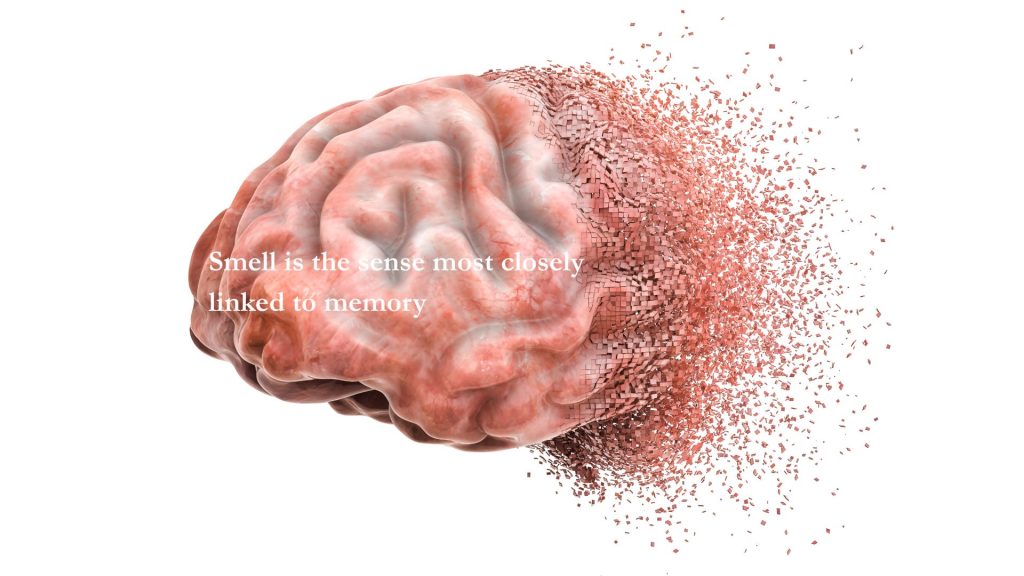
Breathing is closely linked to memory, attention regulation and the amygdala. Therefore breathing has great influence on cognitive functions and emotion regulation. In other words, breathing is the means by which we can best reach the brain, and the strongest, most direct access to the mind.
Neuroscientist Nazareth Castellanos, PhD explains how a study was conducted in Madrid and Vitoria (Spain) where participants with chronic pain were taught over eight weeks how to pay attention to their breathing, to learn different techniques in order to slow down their breathing pace. Evidence proved the pain-relieving effects of slowing down participants’ breathing. Their quality of life improved, inflammatory markers were reduced, and levels of self-acceptance and self-compassion developed, too.
In situations of chronic pain, ‘slow breathing’ can be your friend and ally – it does not kill it, but it does statistically relieve pain, thus improving people’s quality of life.
When talking about the brain’s control over the body, we need to focus on the brain’s most basic structure, the brainstem. The structure to which the brain is attached and where the major areas responsible for visceral functions control are located.
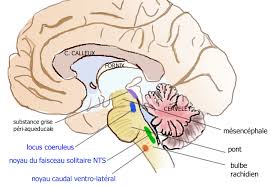
Prä-Bötzinger-Komplex (preBötC)
In the brainstem there is a structure called ‘Locus Coeruleus’ (blue spot in Latin). Locus Coeruleus ‘LC’ is an anatomical region in the brainstem involved in the response to panic and stress, also important for cognitive functions, attention regulation and memory.
Next to LC is this structure that alerts the brain to how we are breathing, called the Pre-Bötzinger complex.
This pre-Bötzinger complex acts as the brain’s respiratory conductor. The pre-Bötzinger structure records respiratory dynamics, meaning that it is here where the internal receptors report back on every lung movement—exactly how long each inhale and exhale lasts, whether your breaths are becoming shallow, or if breathing has stopped entirely. Everything you do with my lungs is recorded here.
When preBötC is disabled, the brain loses the ability to regulate breathing and neuronal function is impaired (in other words, neurons lose their ability to communicate and organise themselves).
NOTE: While the preBötC is actually the ‘pacemaker’ that starts each breath, it is the NTS (Nucleus of the Solitary Tract) that serves as the primary ‘recording station’ for incoming sensory data from the lungs and chest. The NTS then feeds this information into the preBötC and by processing this constant stream of information, the preBötC can instantly adjust your breathing pattern to match your body’s needs.
In 2017, it was first reported in SCIENCE MAGAZINE that pre-Bötzinger complex modulates Locus Coeruleus, and LC sends this information to areas involved in
-
memory,
-
attention regulation,
-
olfactory processing, and
-
expression of emotions.
Researchers referred to this neuroanatomical pathway which runs from the pre-Bötzinger complex to these highly cognitive and emotional structures—as the ‘ascending pranayama pathways’. Such significant acknowledgement of Indian culture already holding profound understanding of breathing techniques and how to modulate them.
So how can we practice this pre-Bötzinger breathing practice and how will it help manage our students examination stress?
Here is the practice by Gustavo G. Díez (translated into English) which may help our students manage examination stress!
-
First of all, let’s count how many breaths per minute each of us is taking. So I am going to count down from 3-2-1 and then we will start counting our breaths for one minute. You can close your eyes if you feel more comfortable. On 3-2-1, and now, you may start counting without changing your breathing. Simply observing your breaths and counting the breaths you notice.
-
Then taking a mental note of the number of breaths you have counted, and moving on to a breathing exercise. Now (for 2 and a half minutes) trying to make your breath longer than usual by exhaling while puckering your lips slightly as if you were to whistle, without straining. If you feel any discomfort, you may shorten your breath a little. The intention is to find a rhythm that feels comfortable whilst you are slowing down your breathing. Breathing in normally through your nose. And breathing out with your lips pursed, as if you were whistling, but without actually whistling. As if you were trying to blow out a candle that’s a long way away from you. This inhalation stimulates the sympathetic nervous system and the exhalation stimulates the parasympathetic nervous system. Just simply relaxing during the next exhalation and keeping on breathing in slowly, slowly, slowly through your mouth with pursed lips, lengthening the exhalation, at a pace that feels comfortable for you.
-
And now (for three and a half minutes), I would simply like to suggest that you also relax parts of your body, making the most of that exhalation and noticing how you can also relax the top of your head or your forehead, your eyes, your face, and even separate your jaws from one another by relaxing your jaw. And on the next exhale, you relaxing your shoulders, your arms and your hands. On the next exhale, releasing your chest, your abdomen and your back. As you continue breathing out slowly, relaxing also your legs and your feet. The whole body relaxes as you breathe out. This exhalation is likely to be even longer, and therefore your overall breathing is much slower. Paying attention to what you feel and letting your breathing be spontaneous. In other words, if you need to breathe faster, do so; you may do whatever feels right.
-
Now counting our breaths again (for one minute): 3 – 2 – 1
-
And stopping the count of your breaths on 3 – 2 – 1
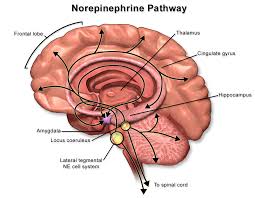
TEACHING TIP: LC triggers this network of neurons located in the brainstem that acts as the brain’s main ‘switch’, whose primary function is to regulate wakefulness, alertness and the transition between sleep and consciousness (the Ascending Reticular Activating System or SRAA).
SRAA is activated during learning processes and the more motivated your students are, the greater their activation of the Ascending Reticular System. Considering after 20 minutes, memory retention has dropped by 60% (Ebbinghaus curve) it might be useful to know how to recharge and refresh your students’ attention spam.
HERE IS HOW TO RECHARGE & REFRESH YOUR STUDENTS’ ATTENTION SPAN:
SRAA is reactivated
by breathing through your nose, and
by movement
So teachers might consider keeping their classrooms filled with fresh air and organising their lessons so students get to move around every 20 minutes, perhaps proposing activities where they actually need to get up from their seats!

EXAM TIP: your brain keeps track of how you have been breathing over the last two hours; if your exhalation has been shorter than your inhalation, and a stressful situation shows up two hours later (like a speaking exam), you will feel more stressed than if, during those two hours, your exhalation had been longer – in which case you’d feel less stressed.
People whose exhalation is shorter than their inhalation are more prone to suffering anxiety (retrieved ‘The brain an an ally’ by Nazareth Castellanos PhD

Recent Posts