INTERCONNECTEDNESS 2025
February 1st. 6th Mindful EFL Day presents this webinar with the intention to provide teachers with ways to include Mindfulness in their daily lives, thus improving their overall well-being and conscious awareness of themselves not only as professionals but fundamentally as human beings. This, in turn, can enrich the overall classroom experience for their students, adding mindful language learning inputs to the curriculum and thus enhancing successful acquisition and learner well-being.
I was honoured to deliver this experiential talk for participants to learn new resources that can contribute to their wellbeing and transform their lives.
Here is a brief presentation of some of the themes we covered:
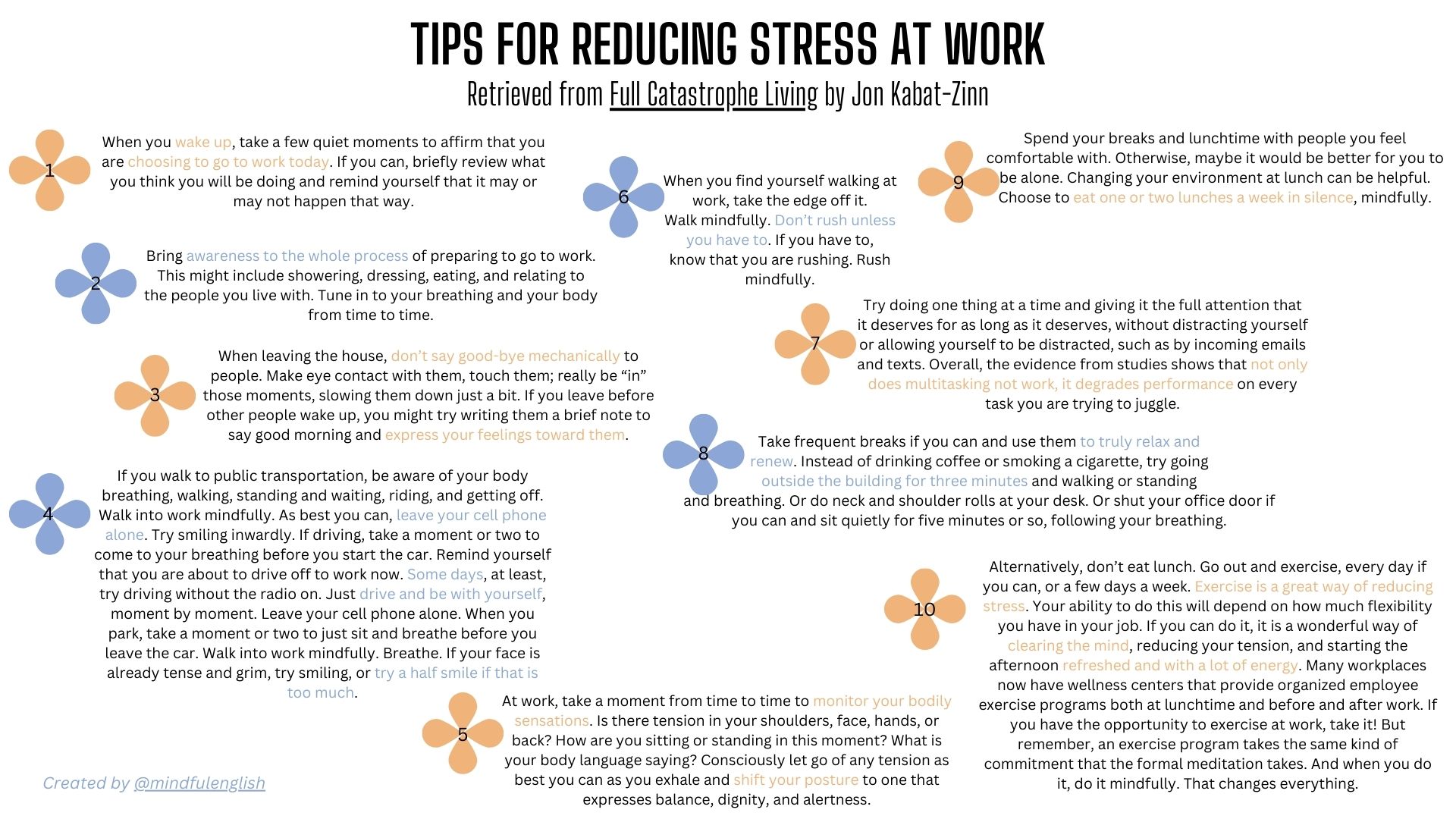
Click the image to read the content of Mindful EFL Newsletter 2025
Little did Hans Selye know that a negligible language mistake was going to make quite an impact in the world.
The word stress seems to have been with us forever but it was only in 1951 when it was seen for the first time in the prestigious magazine Science.
Hungarian-Canadian endocrinologist, Hans Selye (1907-1982) would hear his engineer friends from the students’ accommodation discuss strain and how by the end of the week, machines proved faulty and seemed in good need of a proper rest to start functioning again.
He thought that was a great example to illustrate how our body functions and how much rest is needed for recovery and recuperation. Especially after experiencing a stressful situation or when stress sustains in time.
When Hans Selye wrote this remarkable article about General Adaptation Syndrome for Science magazine he mistook this word he thought he had heard from his friends and wrote about Stress and Disease. So, off the text went to the printers!
When the article was published, a shy Hans Syley apologized for his spelling errors (English was not his mother tongue) and the matter of the fact actually was that he was praised by his research directors for his innovation and creativity in coming up with a new word.
But let us focus now on the experience itself of stress.
The modern concept of well balanced health can be represented as an equilateral triangle composed of a physical side, a mental side, and a social side. Each of equal importance. This is a well founded concept, and those who live according to it maintaining the balance of all three sides enjoy good health. Unfortunately anything that affects the mental side of health can affect the other sides and eventually the whole triangle. To better understand how this can happen let us first look at the problems of animals (a human being after all is also an animal).
All animals encounter tensions of various kinds as a normal part of their lives. They may begin with the possibility of having to cede their living space to another species, the need to defend their shelter, to protect their young, even to compete for a mate. Naturally the greatest tension is the fear of losing their lives. And for this, Nature has provided every animal with certain protective reactions, one of the most important of which is the fear instinct. Here is how it works.
The moment an animal realises that there is danger, immediately the fear instinct awakens every reserve in its body, preparing it to take one of two attitudes to ensure its survival: fight or flight. In either case it must spring into action and use its energy reserves. When the danger has passed the animal calms down and returns to normal as if nothing has happened. The fear instinct has kicked in and there are no harmful after effects.
Scientists believe that the same protective responses exist in the human animal, located in an area of the brain, as if the fear instinct of our ancestors still lives there ready to press the panic button. But unlike other animals, human beings have more than instinct. They have a superior intellect and a brilliant and creative imagination that unfortunately, can create real dangers and trigger unnecessary tensions and fear.
And so, they begin ruminating in the face of a “threat” when neither fighting nor running makes sense, and must swallow their pride along with all the unused biochemical preparations that their body manufactured. So they are literally cooking in their own juices.
Here is how we can disarm unhealthy patterns through mindful awareness of stress.
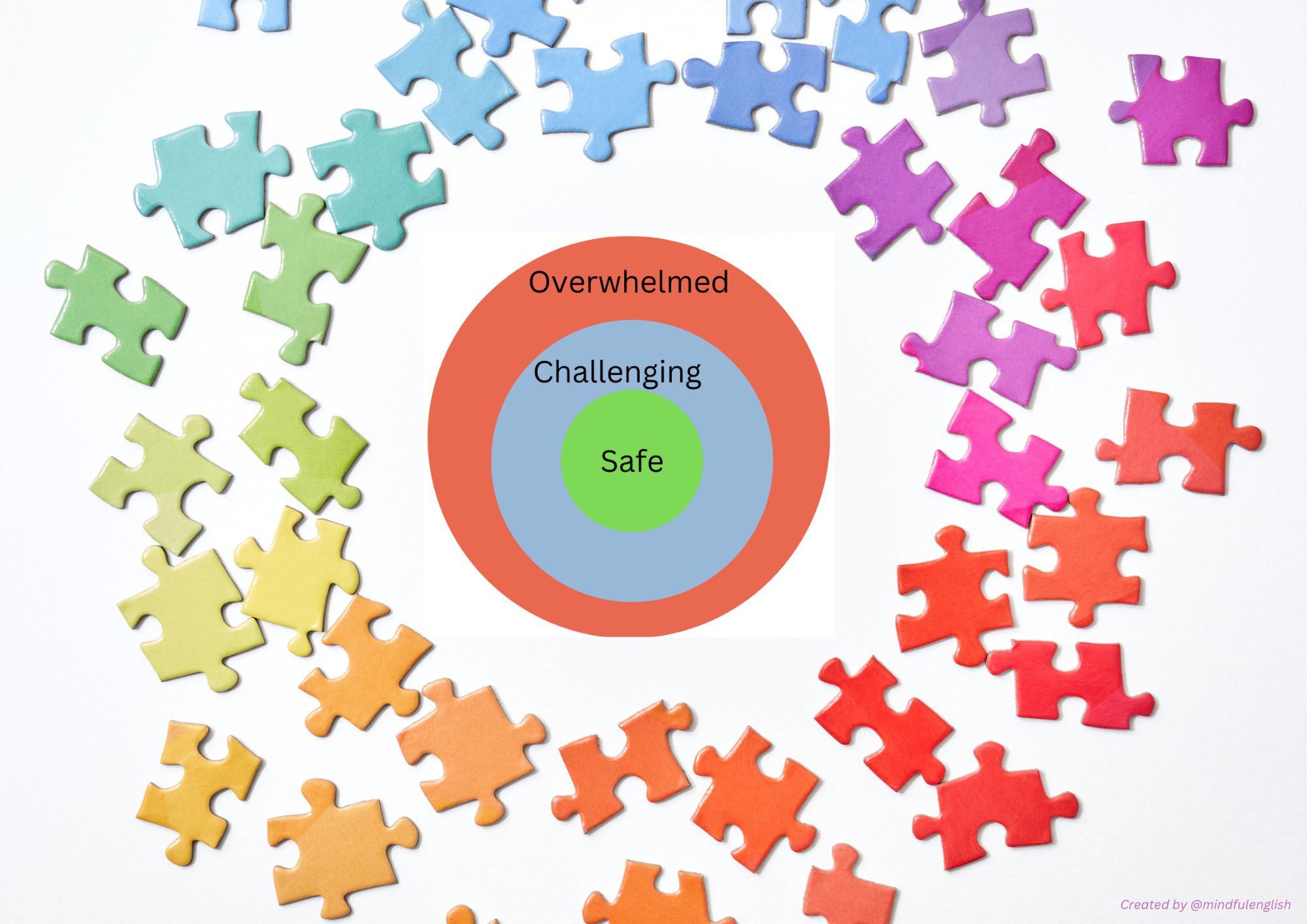
There are different types of stress: time stress, role stress, food stress, people stress, work stress or sleep stress. Recall something that usually makes you stressed or has recently made you feel some discomfort like things at work that make you overreact, and see what you notice. Remember to choose an event that is not too challenging (within your comfort / learning zone) and take a note of how you have experienced that event during the past week:
- What was your direct experience?
- Any physical sensations?
- Where were these occurring -a specific location or through the whole body?
- Did the sensations change or were they constant?
- What were the emotions and feelings connected to them?
- What thoughts arose?
Paying mindful attention to the experience may help you become aware of patterns that sustain in time and generate chronic stress reactions that you could actually redirect into a more healthy response. Mindfulness is a super power we have which provides that gap between stimulus and response where we can choose how to better respond to situations that are constantly making us feel discomfort or stress. You can choose to break the cycle.
Jon Kabat Zinn talks about the daily practice of Mindfulness as a bank account where you are putting money aside for when needed (in this case not money but calmness). And remember that being mindful does not necessarily mean sitting on a cushion for your meditation practice! You can Be Mindful by simply paying full attention to what is unfolding at this precise moment.
|
References: MNB Nazareth Castellanos, MBSR Brown University, FCL by Jon Kabat Zinn, El estrés explicado por Walt Disney |